Kantstraße: A hundred years, eight restaurants and a lot of good food
In 1923, Berlin’s first Chinese restaurant opened on Kantstraße. Later came artists, Austrian cooking and a young restaurateur named The Duc Ngo. Today, Wiener schnitzel, Vietnamese phở and Mexican mole are only a few house numbers apart.
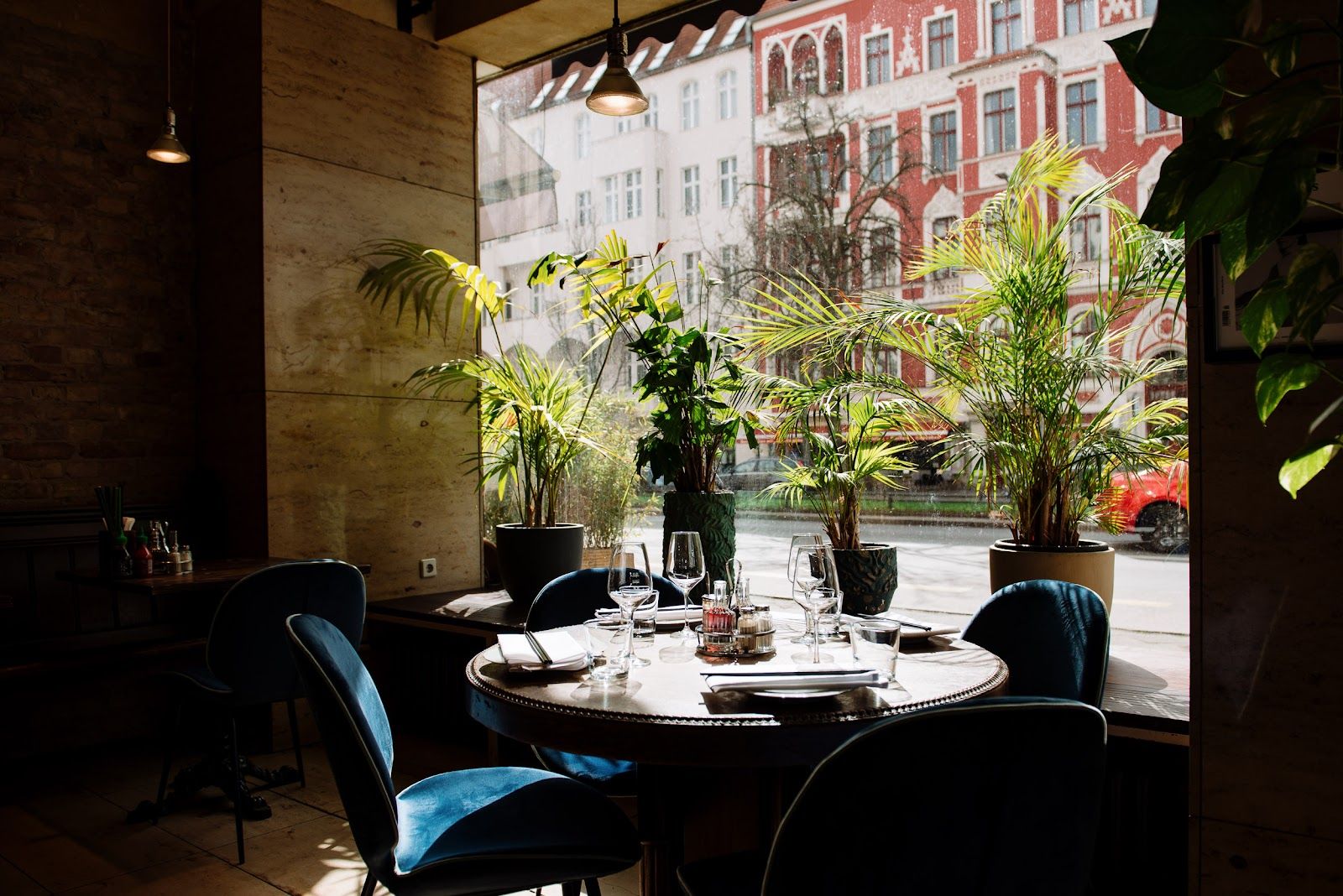
At first, Kantstraße is dominated by cars, buses and wide pavements. The restaurants tell a more interesting story.
In the Paris Bar hang works by Martin Kippenberger and Jörg Immendorff. A few doors down, Japanese skewers are grilled, Vietnamese soups simmer and fish is displayed on ice. Behind mirrored, graffiti-covered windows, sashimi meets Mexican tortillas.
For more than a hundred years, Kantstraße has been one of Berlin’s most varied restaurant streets.
When Berlin learned to eat Chinese
In 1923, Tientsin opened at Kantstraße 130b; it is considered Berlin’s first Chinese restaurant. Its founder had previously been the cook at the Chinese legation. Many young people from China studied at the nearby Technische Hochschule, and the legation was on Kurfürstendamm.
Tientsin became a meeting place for students, artists and intellectuals. The service was unusual for the time as well: German waiters in formal dress served a largely Asian clientele.
After the Second World War, Charlottenburg became the social centre of West Berlin. Restaurants and bars turned into meeting places for artists, actors and journalists. Two addresses still convey something of that era today.
Schnitzel and the old West Berlin art scene
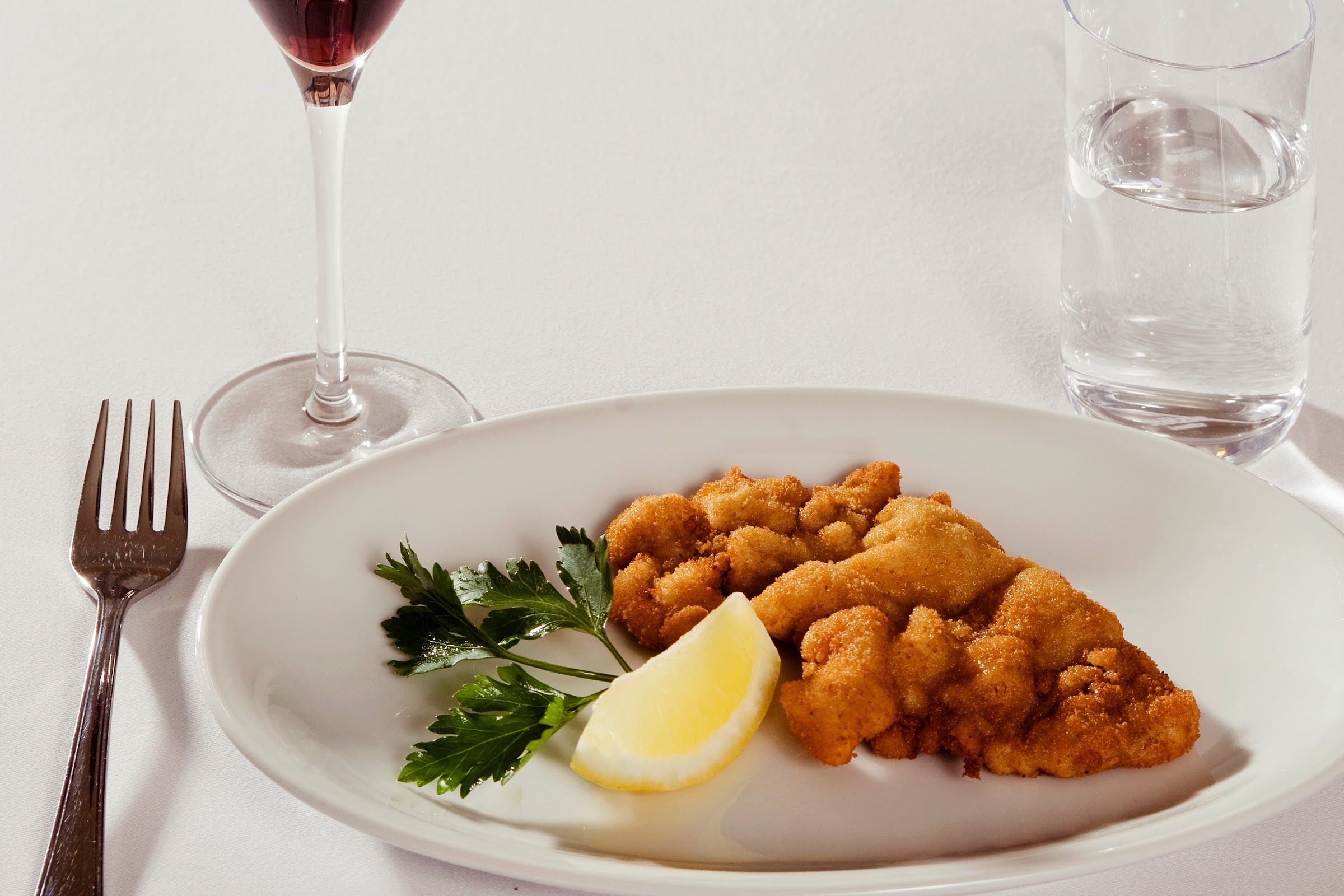
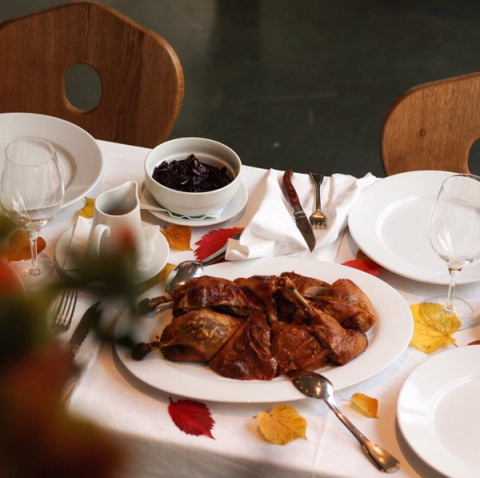
Since 1994, Arthur Schneller has run Ottenthal at Kantstraße 153. It is named after his home village in Lower Austria. Here you get Tafelspitz soup, Styrian pumpkin soup and Wiener schnitzel from veal loin with potato and cucumber salad. The farmhouse ham comes from the Blauensteiner farm in Ottenthal and arrives with mustard pickles and freshly grated horseradish.
Charlottenburg · AustrianOttenthal Restaurant & WeinhandlungOn the map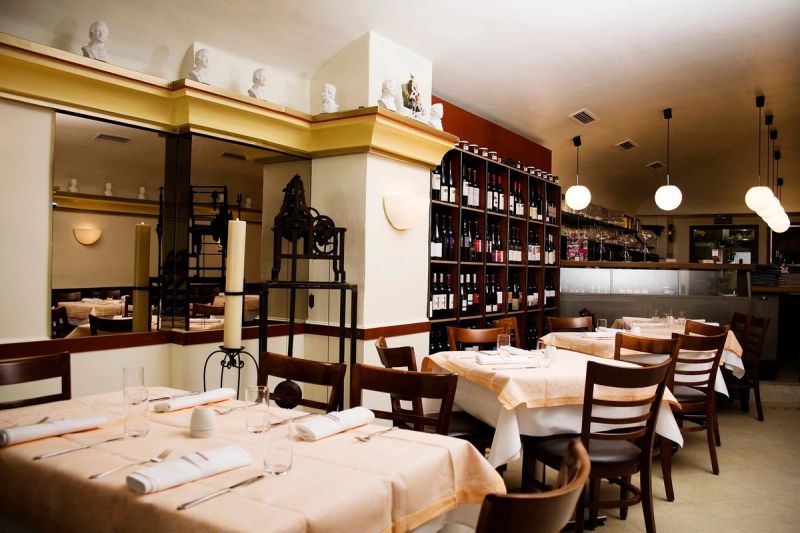
Right next door is the Paris Bar. From 1979, Michel Würthle made it a meeting place for the art scene. Paintings, drawings and photographs filled the walls; Martin Kippenberger is said to have occasionally paid his bills with pictures.
The kitchen remains French in character. Oysters, entrecôte with béarnaise sauce and French fries are among the classics, and people eat until late at night. The art on the walls is probably worth a considerable sum today. On the plates, it is still steak and fries.
Charlottenburg · FrenchParis BarOn the map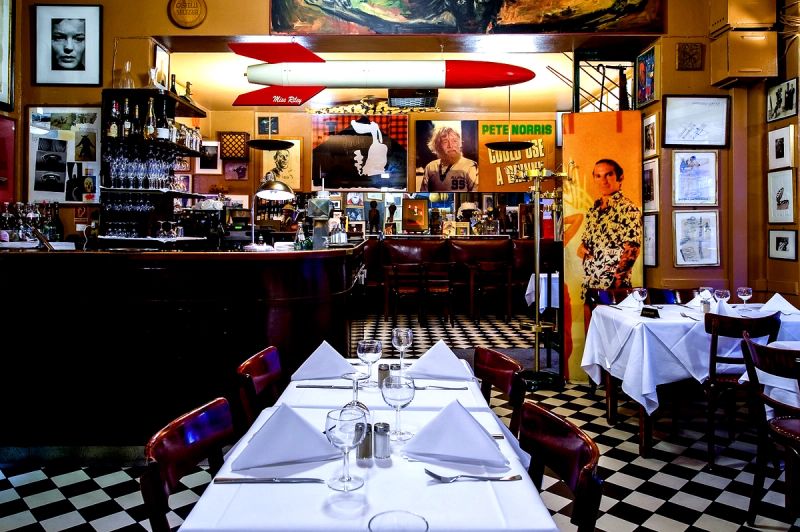
The Duc Ngo and the new Kantstraße
In 1999, The Duc Ngo opened Kuchi together with his cousin. Ngo had come to Berlin from Hanoi as a child. At the time, Kantstraße was hardly a preferred address for ambitious new restaurant concepts. With Kuchi, that slowly began to change.
Charlottenburg · JapaneseKuchi KantOn the map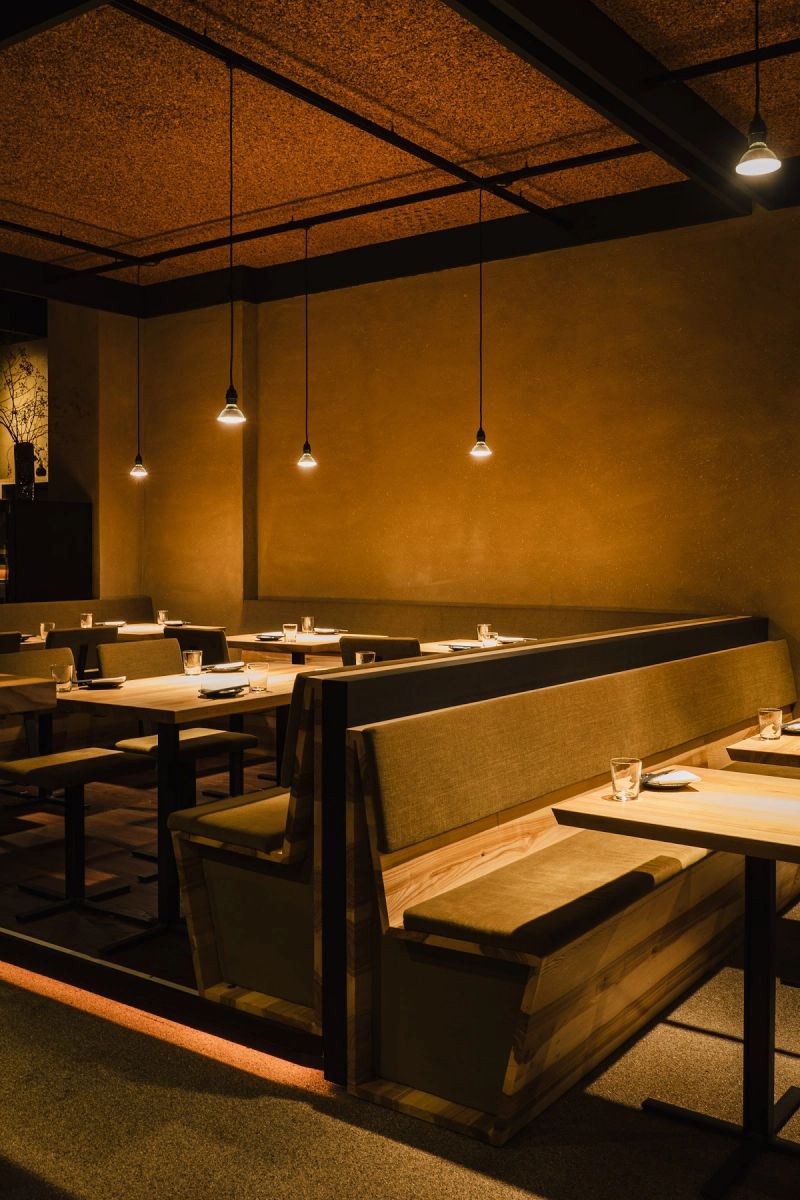
Since a renovation in 2024, the restaurant has an open sushi bar and a kitchen reminiscent of Japanese izakayas. Mackerel comes off the robata grill, chicken thigh and chicken skin are served on skewers. There is even a “Tokyo Carbonara” on the menu, made with udon, guanciale, egg yolk and parmesan.
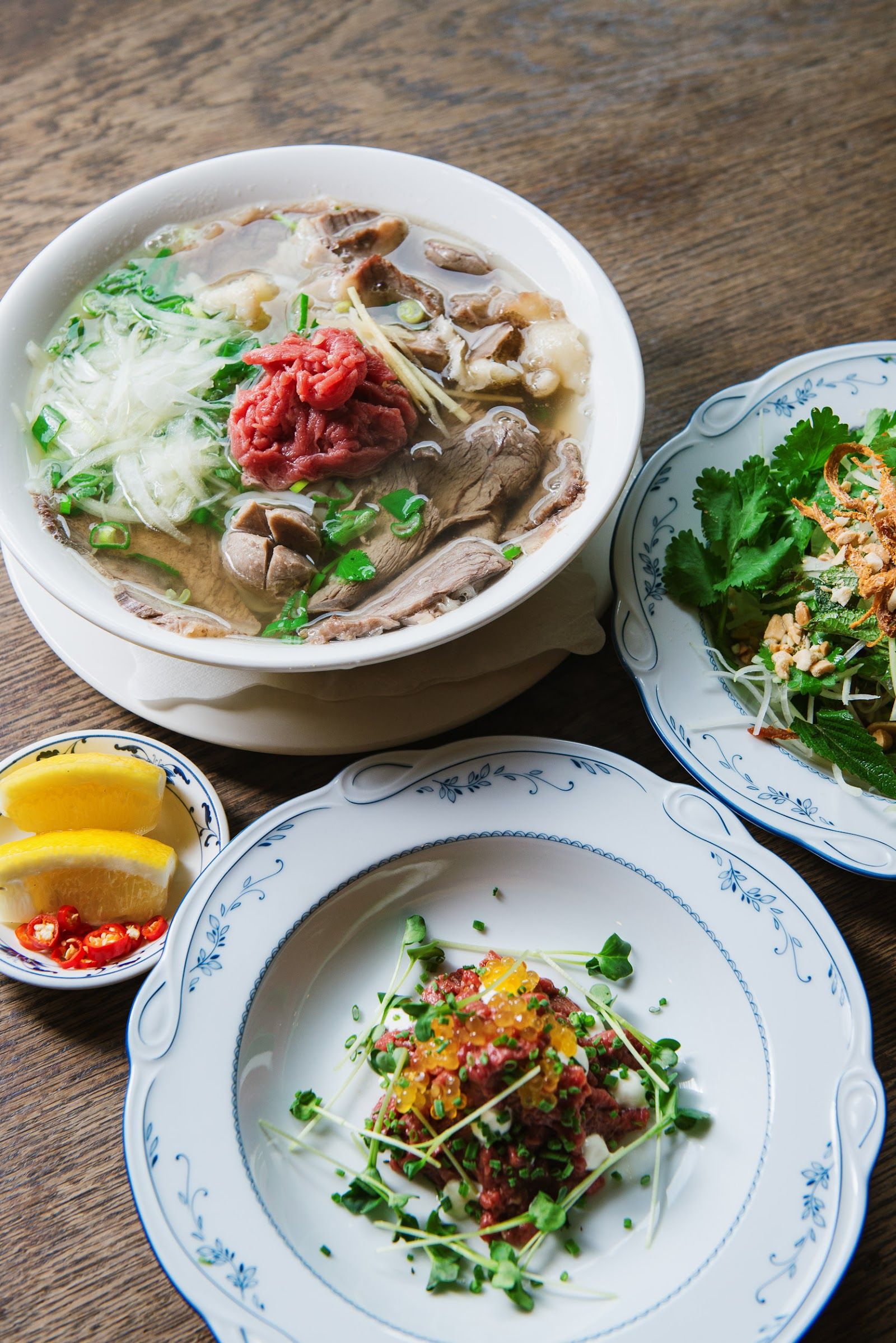
In the same building, Ngo runs Madame Ngo, a Vietnamese brasserie and homage to his birthplace. At its centre is phở, the aromatic noodle soup. In phở bò tái, thin slices of raw beef cook only in the hot broth. Alongside, there is nem Hà Nội, crisp spring rolls with crab and minced pork, or pork belly prepared three ways under the name “Les Trois Cochons”.
Charlottenburg · VietnameseMadame Ngo une Brasserie HanoiOn the map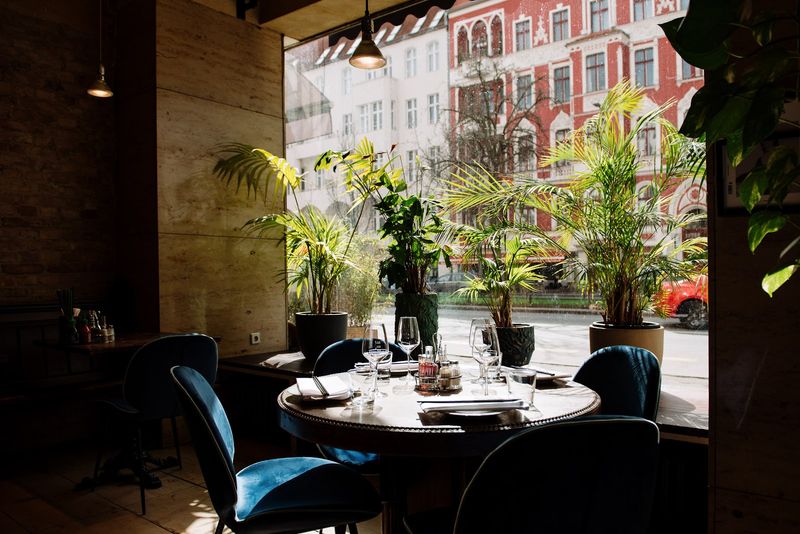
A few steps away is FunkyFisch. Guests choose their fish themselves from a large display. The kitchen combines Mediterranean and Asian influences: gambas al ajillo, octopus, bouillabaisse or fried fish in a Chinese bun with hoisin sauce.
Charlottenburg · SeafoodFunkyFischOn the map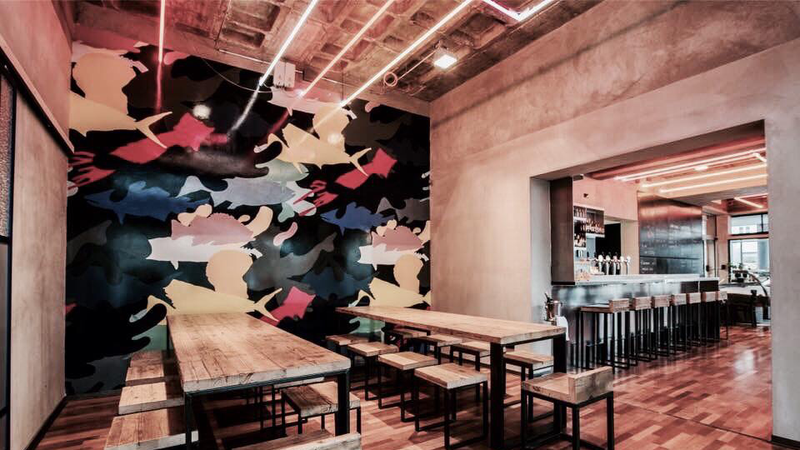
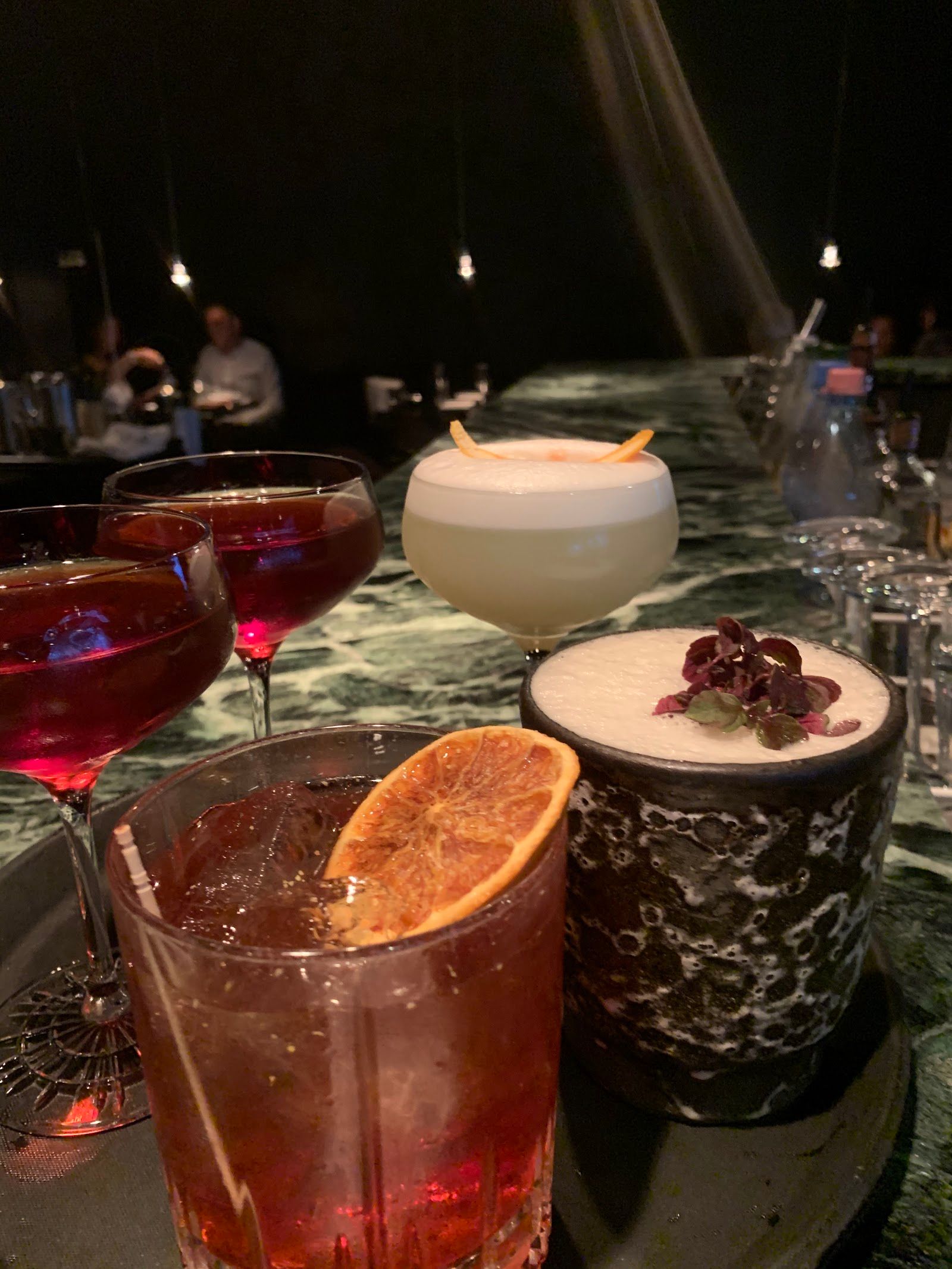
Right next door is Ngo’s 893 Ryōtei. Behind the mirrored, graffiti-covered façade, the kitchen combines Japanese techniques with South American flavours. Sashimi taquitos pair raw fish with jalapeño and truffle mayonnaise; tuna belly and caviar land on tostadas. Beef fillet skewers with steak salsa are on offer too.
Charlottenburg · Japanese893 RyoteiOn the map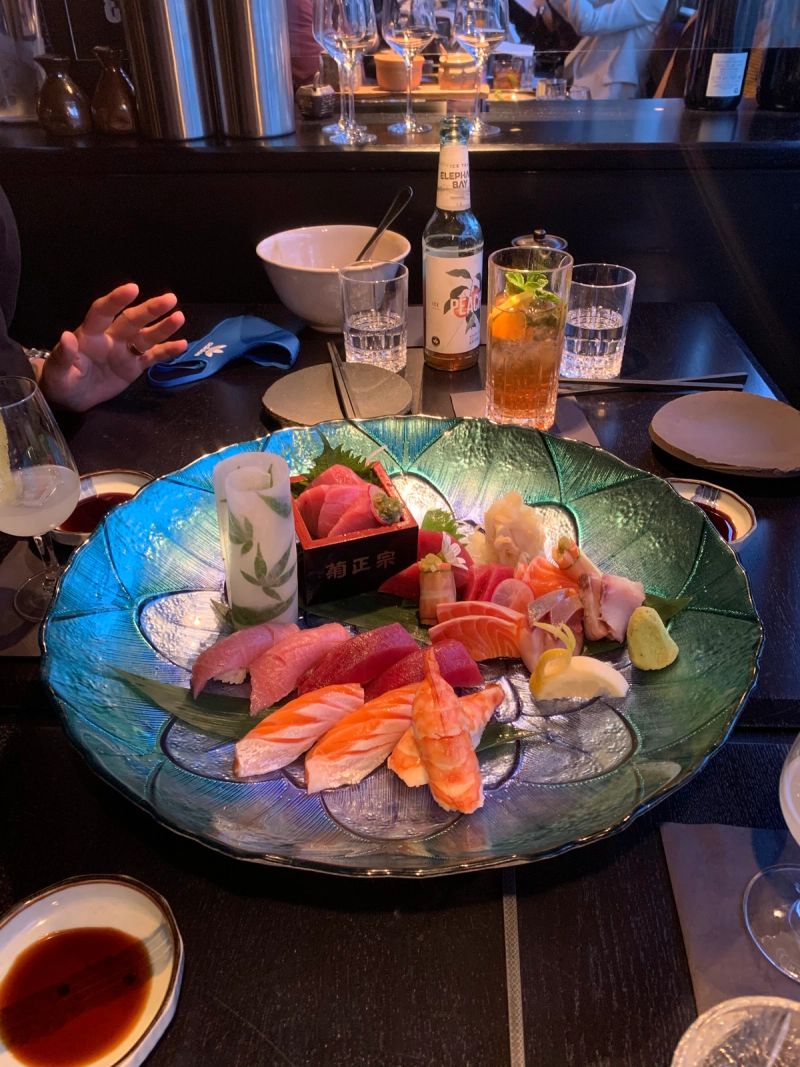
Four restaurants, four different approaches – and one restaurateur who has decisively shaped the culinary development of this street.
New voices between the institutions
Kantstraße, however, has long been about more than The Duc Ngo and the old West Berlin haunts. Between established Chinese restaurants such as Good Friends and Do De Li, a younger generation is setting its own accents.
At FúFú Bistro, Ruiyang Tian and Yuwei Tang cook dishes from the south-western Chinese provinces of Yunnan, Guizhou and Sichuan. Tian herself comes from Guizhou and arrived in Germany in 2020, originally to work as an engineer. Today the menu features crisp fried mint leaves with beef, chilli and garlic, pork ribs with chestnuts and fried potato slices with pickled vegetables.
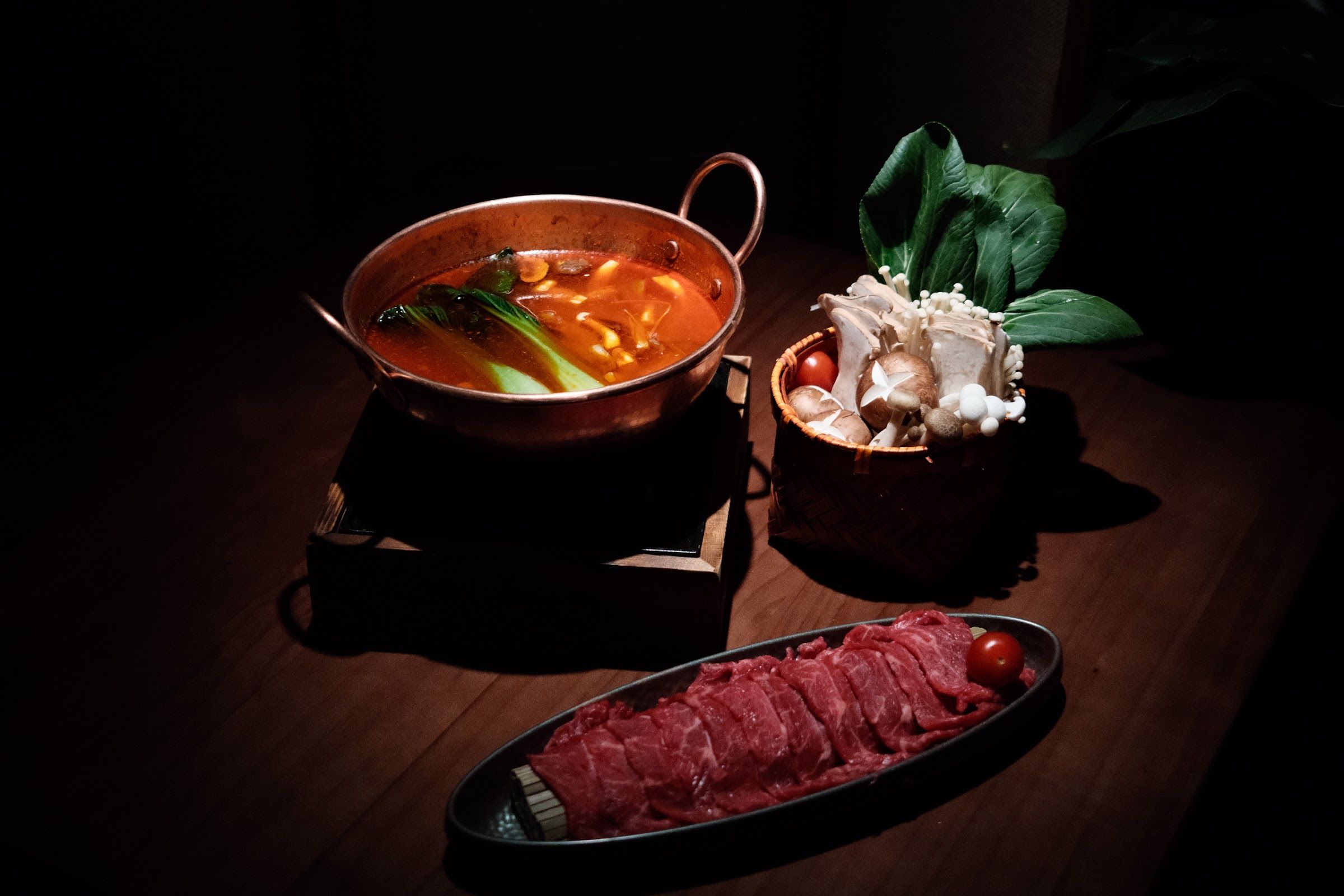
These are flavours and regional traditions that rarely appear on the menus of many Chinese restaurants in Germany.
Charlottenburg · ChineseFúFú Bistro 福·山里小馆On the map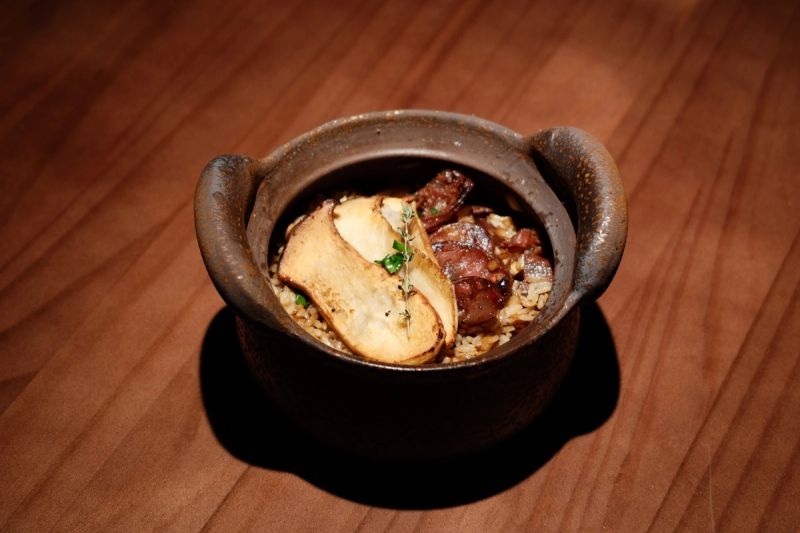
Further west, at Kantstraße 74, Raúl Oliver Arriaga from Mexico City and Julia Schmiedehausen run Comedor. The name means “dining room”. Tortillas are made by hand every day, served with dishes such as aguachile with fresh fish or mole amarillito with aubergine and courgette. Mexican techniques meet regional ingredients and European influences.
Charlottenburg · MexicanComedorOn the map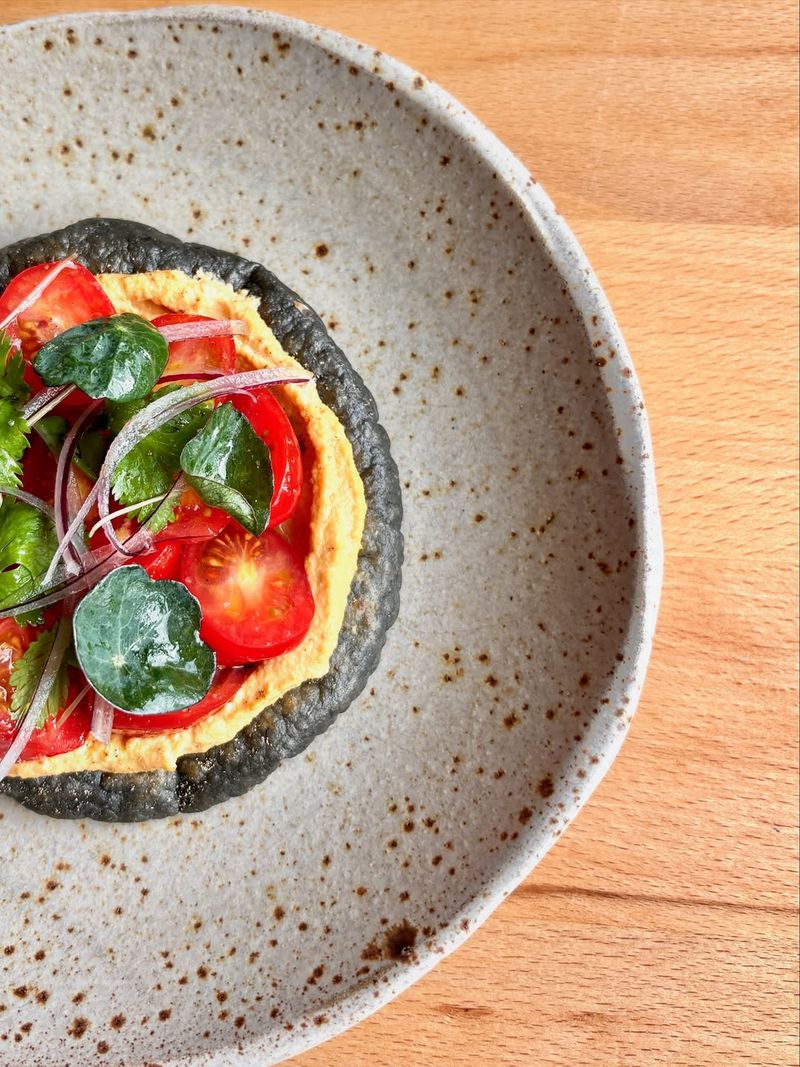
A street that is never finished
Kantstraße has reinvented itself several times. In the 1920s, Chinese students brought their food culture to Charlottenburg. Later, the area became a meeting place for the West Berlin art scene. Since the late 1990s, new Asian restaurants and ambitious kitchens from all over the world have joined them.
Today, old institutions stand next to places serving regional Chinese specialities or contemporary Mexican dishes. The best part: you can trace this development while eating.
A schnitzel at Ottenthal for lunch, phở at Madame Ngo next time. One evening at 893, another at FúFú. And at some point a long night at the Paris Bar.
The story began in 1923 with Tientsin. It still isn’t finished.
 Charlottenburg beyond Kantstraße: udon, galettes, schnitzelGuides · August 26, 2026Charlottenburg beyond Kantstraße: udon, galettes, schnitzel