Schüsseldienst: When a top chef decided to serve nothing but bowls
For seven years, Felix Mielke ran the kitchen at Berlin’s Le Faubourg. Then he opened a takeaway in Schöneberg. Since then, beef shoulder braised for 18 hours, fish and elaborately prepared vegetables have gone into bowls. Behind it is the wish to cook again himself.
In fine dining, a successful career looks roughly like this: you work your way up through the stations, become head chef, lead a team and at some point spend more time on rotas than at the stove. Felix Mielke knew this path well.
In his mid-twenties, he took over the kitchen of Le Faubourg at the Hotel Sofitel on Berlin’s Kurfürstendamm. For seven years he was responsible for the menu, the staff and the operation there. Before that he had worked at the Savoy and the Ritz-Carlton, among others. In 2019, he opened a self-service takeaway in Schöneberg. He called it Schüsseldienst.
When the head chef hardly cooks any more
The decision had to do with everyday working life. As head chef, Mielke was increasingly occupied with organisation and staff planning; others were usually at the stove. He told the Berliner Zeitung in 2019 that in the end he mainly cooked himself on Saturdays, when he prepared the lunch menu for the following week. It was his favourite day.
Schüsseldienst offered the chance to work closer to the dishes again – with less restaurant ceremony. Guests order at the counter, pick up their food and sit down at a table with a bowl. The effort that would otherwise go into service and the sequence of courses goes largely into the cooking here.
When Mielke opened, bowls were already everywhere: grains or rice as a base, topped with vegetables, a dressing and as many colours as possible. Mielke had braises, purées, sauces and precisely prepared ingredients in mind instead. His bowls were meant to do what had previously happened on large restaurant plates.
Eighteen hours for a lunch
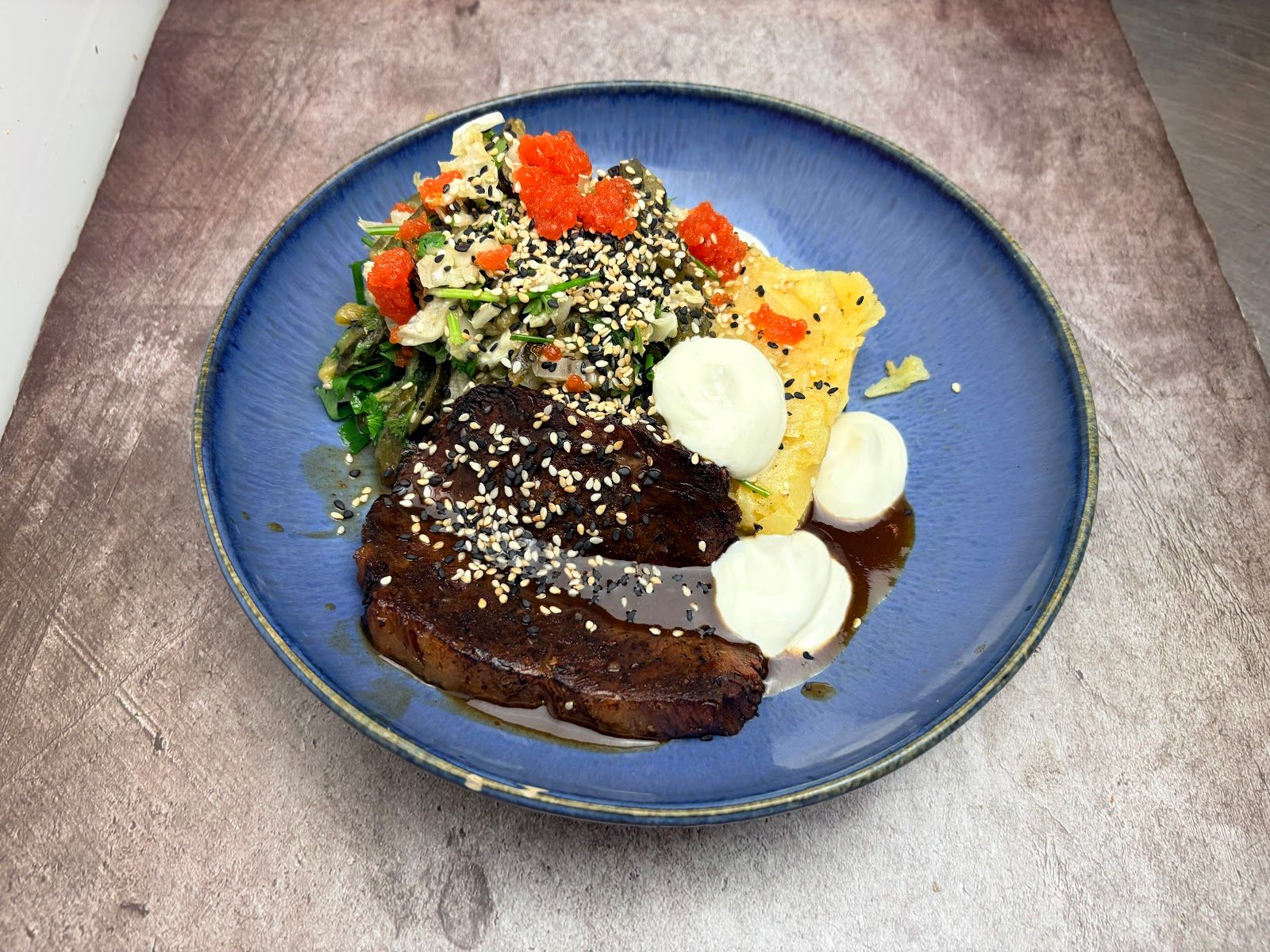
This is clearest in the beef shoulder, one of the house’s best-known dishes. The meat comes from the shoulder. The connective tissue of this cut softens during slow cooking and develops a juicy, almost gelatinous texture.
At Schüsseldienst, according to the restaurant, the beef shoulder is cooked for 18 hours. It is served with potato and leek mash, courgette with sesame and soy, Chinese cabbage, herbs, chilli pearls and lime-sesame crème fraîche.
The combination is carefully built: hearty meat on a creamy base, vegetables with bite, chilli and lime for heat and freshness. The acidity in particular keeps such a rich dish from becoming heavy. The beef shoulder is one of Eat This’s Must Eats and a good introduction to Mielke’s cooking.
Schüsseldienst
One dish here made it onto our cards.
What stands out above all is the ratio between preparation and service. Eighteen hours of cooking, a few minutes at the counter. What the guest takes away is above all a warm bowl with very good contents.
A kitchen without borders
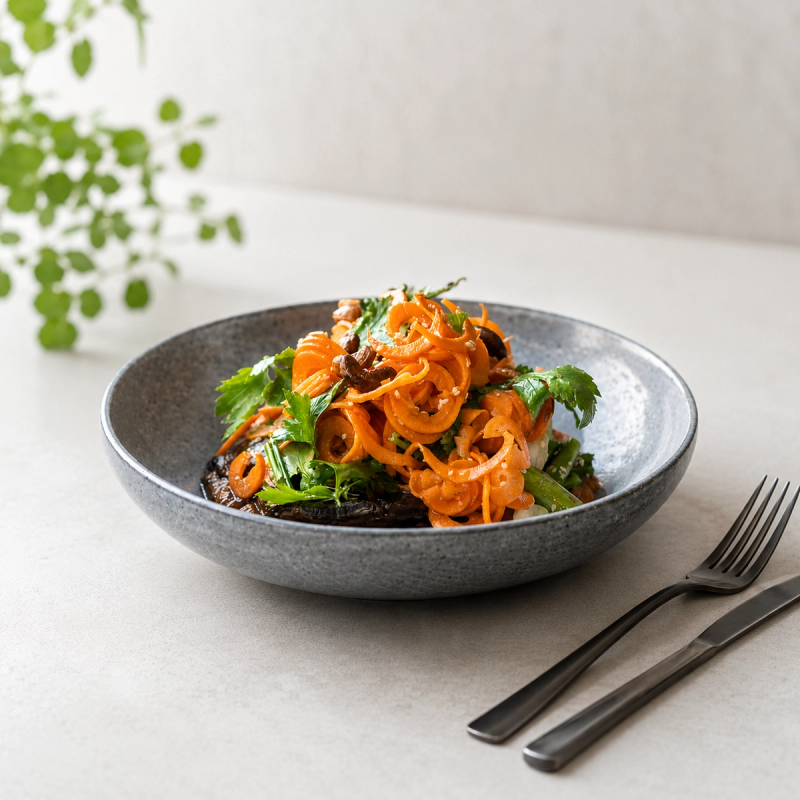
The rest of the menu shows that Mielke treats culinary traditions more as a toolbox. Catfish is cured tataki-style and flamed on the surface. It comes with carrot salad, pak choi, sesame, coriander yoghurt and snow peas. The freshwater fish, not exactly ubiquitous on Berlin menus, gets a treatment many people associate with tuna.
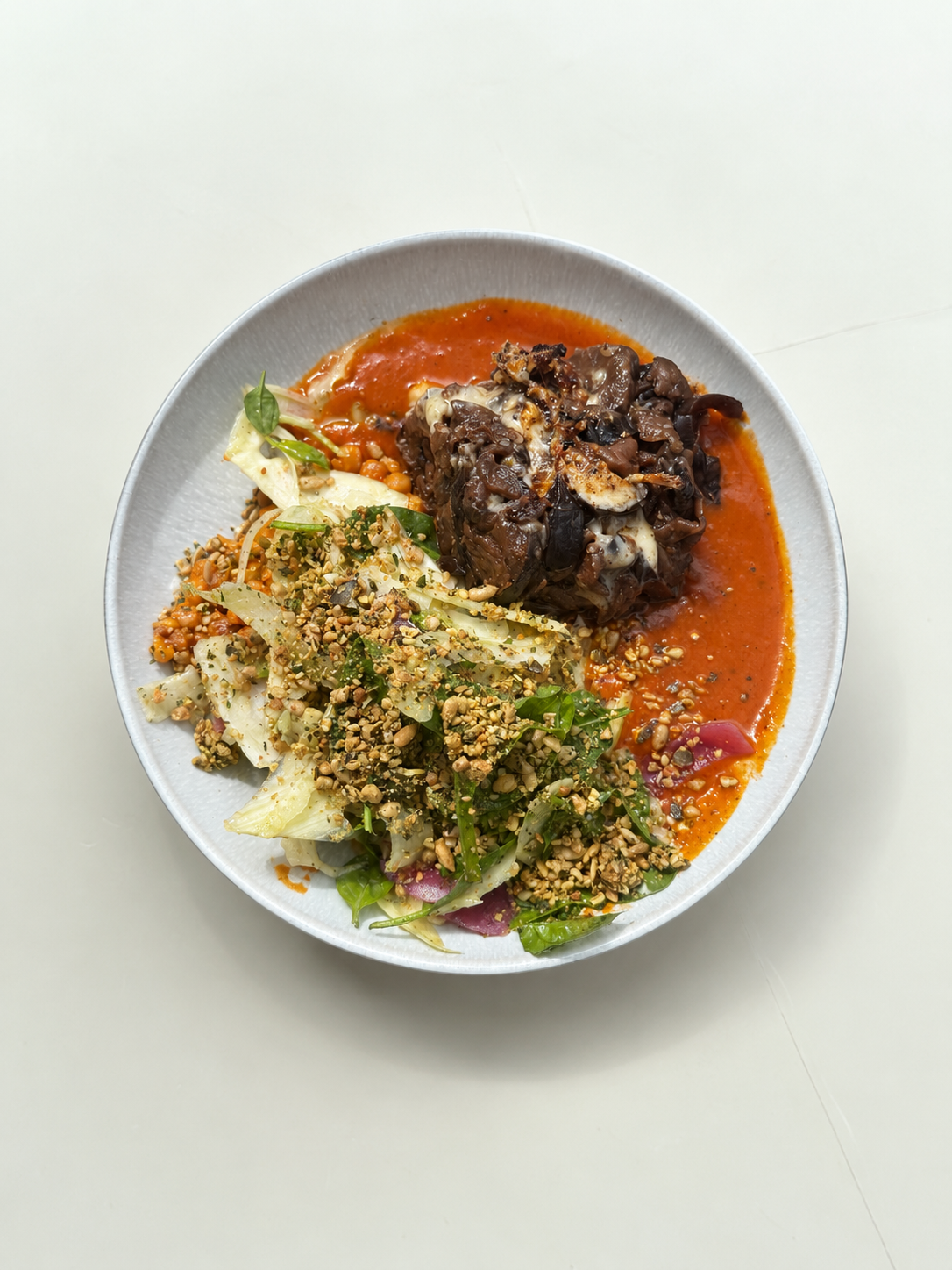
Among the vegetarian dishes, baked aubergine, parmesan and fregola meet a tomato broth; elsewhere, miso, sesame and marinated vegetables play a role. The individual components come from different cuisines. What holds them together is the balance of acidity, salt, fat and texture.
For dessert, the rice pudding with salted caramel and candied almonds is a fixture. Crunchy nuts and caramelised roasted notes turn a familiar dish into a pretty convincing finish.
Fine cooking in a self-service format
The idea raises a practical question: how much handwork can go into a meal meant for a lunch break? In upscale restaurants, high menu prices also pay for service, space and long stays. At a takeaway, processes and the offering are more concentrated, and guests take on part of the service themselves.
Mielke uses this structure to offer elaborately prepared dishes at more accessible prices. When it opened in 2019, many bowls cost less than ten euros. Today, regular dishes are mostly in the mid-teens. The difference also tells a story of how sharply food, energy and staff costs have risen.
Since 2019, Schüsseldienst has been part of Schöneberg’s Akazienkiez. In May 2021, it moved within the street to its current location at Akazienstraße 7. There is more room there for guests and production; catering for offices and events is now also part of the business. Ordering at the counter has stayed.
Mielke’s move from hotel restaurant to takeaway was a decision against the usual prestige path of his profession. He took his craft standards with him. Meat is braised for hours, vegetables are handled with care, sauces are balanced. Only the crockery has become more modest.
At Le Faubourg, the beef shoulder would probably have come on a larger plate.
Schöneberg · EuropeanSchüsseldienstOn the map